Fixed Assets: The Foundation of Business Operations
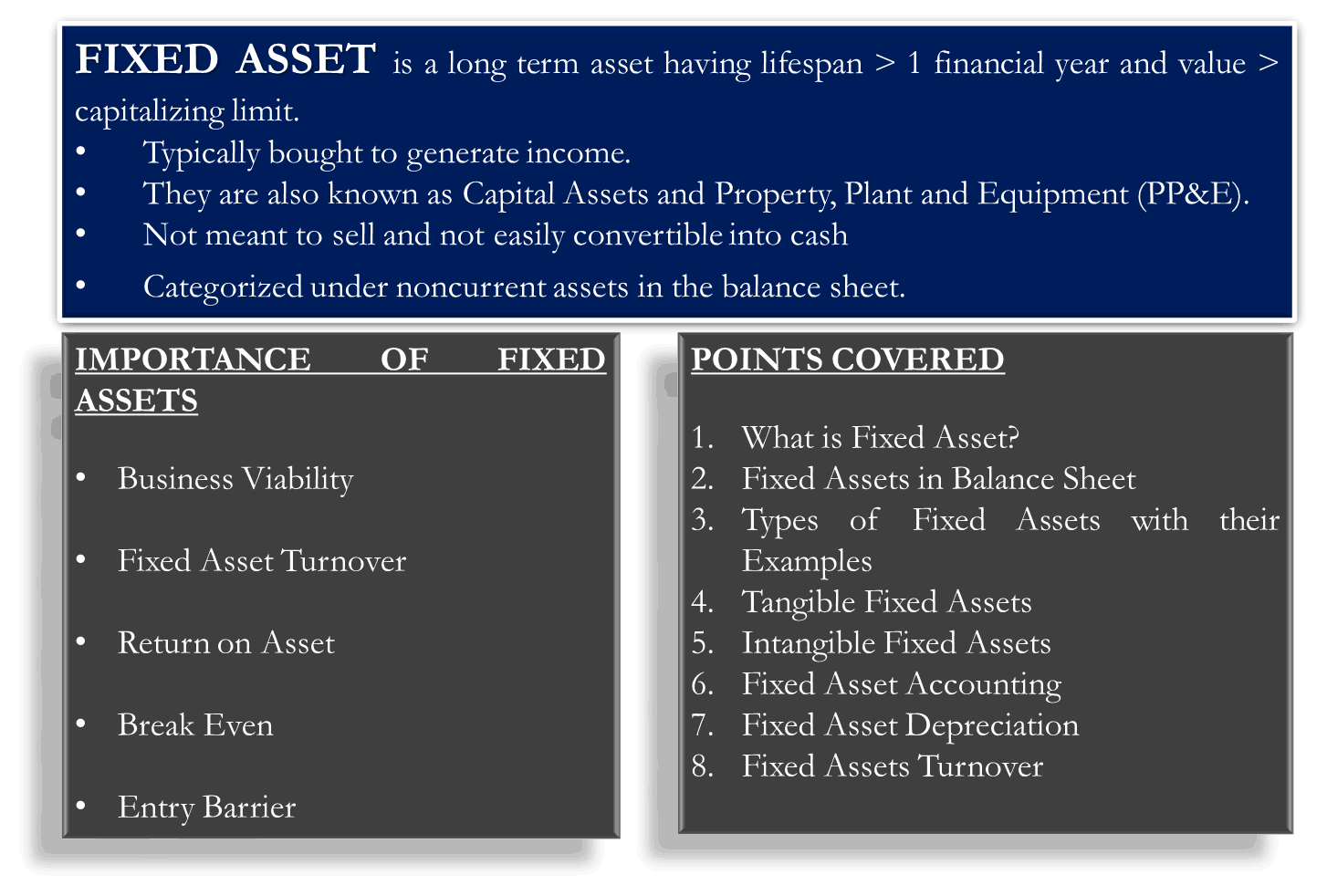
Fixed assets, also known as property, plant, and equipment (PP&E), are tangible assets that a company owns and uses to generate income. These assets are not intended for resale in the ordinary course of business. Instead, they are held for more than one accounting period and contribute to the company's long-term profitability. Examples include land, buildings, machinery, vehicles, furniture, and computer equipment.
Importance of Fixed Assets
Fixed assets are vital for a company's operations. They represent a significant investment and provide the infrastructure needed to produce goods or services. Properly managing fixed assets is crucial for maintaining operational efficiency and ensuring the longevity of the business. A robust fixed asset management system helps track the location, condition, and depreciation of each asset.
Accounting for Fixed Assets
The accounting treatment of fixed assets involves several key principles. Initially, fixed assets are recorded at their historical cost, which includes the purchase price and any costs directly attributable to bringing the asset to its intended use, such as installation and transportation. Over time, fixed assets, with the exception of land, are subject to depreciation.
Depreciation is the systematic allocation of the cost of an asset over its useful life. Common depreciation methods include straight-line, declining balance, and units of production. The chosen method should reflect the pattern in which the asset's economic benefits are consumed. At the end of each accounting period, depreciation expense is recorded, reducing the asset's book value (cost less accumulated depreciation) on the balance sheet.
Disposal of Fixed Assets
When a fixed asset is sold or retired, the company must remove it from its books. The difference between the asset's selling price and its book value is recognized as a gain or loss on disposal. A gain occurs when the selling price exceeds the book value, while a loss arises when the selling price is less than the book value. This gain or loss is reported on the income statement.
Challenges in Fixed Asset Management
Managing fixed assets can present several challenges. One challenge is tracking the physical location and condition of assets, especially in large organizations with numerous assets spread across different locations. Another challenge is determining the appropriate depreciation method and useful life for each asset. Additionally, companies must ensure that fixed assets are adequately insured and protected from damage or loss.
Fixed Asset Software
Companies often employ specialized software to streamline fixed asset management. These systems automate tasks such as asset tracking, depreciation calculation, and reporting. Fixed asset software can also improve accuracy, reduce errors, and provide valuable insights into asset performance.
Conclusion
Fixed assets are a cornerstone of business operations. Effective management and accurate accounting for these assets are essential for financial reporting, operational efficiency, and long-term profitability. By implementing sound fixed asset management practices, companies can maximize the value of their investments and ensure sustainable growth.
 584×412 fixed assets definition meaning market business news from marketbusinessnews.com
 1600×1638 fixed assets business diagram illustration stock illustration from www.dreamstime.com
 1200×675 fixed assets examples from www.examples.com
 1500×1551 imagenes de fixed assets imagenes fotos vectores de stock from www.shutterstock.com
 351×351 fixed asset definition types formula examples list from byjus.com
 823×400 fixed asset accounting sage software from www.sagesoftware.co.in
 1200×800 fixed assets from www.fity.club
 1280×720 fixed asset definition types formula examples from www.knowledgeglow.com
 2240×1260 fixed asset types formula calculation methods from www.profitbooks.net
 2940×1960 fixed assets text keywords isolated white board background from www.vecteezy.com
 1000×700 fixed assets definition types characteristics examples from happay.com
:max_bytes(150000):strip_icc()/fixedasset-edit-3fa5166c806b4897921df1a7dbcb5826.jpg) 1500×1000 fixed asset accounting examples from investguiding.com
1500×1000 fixed asset accounting examples from investguiding.com
 1000×500 fixed assets concept formula characteristics types calculation from www.geeksforgeeks.org
 768×427 fixed asset examples examples fixed assets excel template from www.educba.com
 1480×980 fixed assets stock images backgrounds from www.vecteezy.com
 1000×500 fixed asset concept illustration laptop text screen gold coin from stock.adobe.com
 1300×954 fixed assets res stock photography images alamy from www.alamy.com
 1454×982 fixed asset type tangible intangible accounting dep from efinancemanagement.com
 1740×2044 fixed assets examples lists business fields careercliff from www.careercliff.com
 1024×1024 fixed assets audit nkg advisory business consulting services pvt from nkgabc.com
 1200×630 fixed assets accounting shiksha from www.shiksha.com
 900×500 fixed assets difference fixed assets current assets from www.educba.com
 1600×900 fixed asset management netsuite netsuite blog saturotech from www.saturotech.com
 900×506 fixed assets icon from ar.inspiredpencil.com
 600×418 thousand fixed asset management royalty images stock from www.shutterstock.com
 1179×1095 understanding essentials fixed asset management abj cloud from abjcloudsolutions.com
 2508×1672 fixed asset management software archives flexi from www.flexi.com
 1280×550 importance fixed assets businesses from www.assetinfinity.com
 1125×1390 fixed assets management concept icon stock vector image art alamy from www.alamy.com
 1024×537 fixed assets definition examples types business shopify uk from www.shopify.com
 1600×1423 fixed assets list business accounting guide outline diagram from www.dreamstime.com